Falling house prices sharpen Australia's affordability and density debate
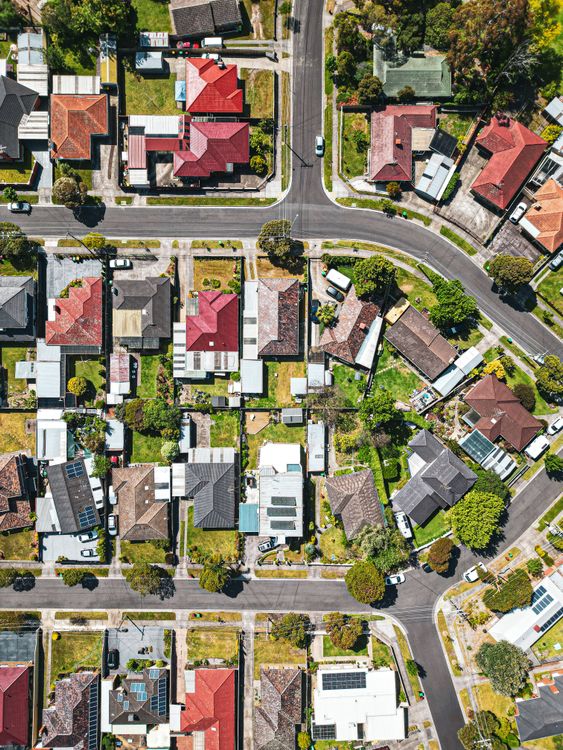
Illustrative aerial photograph of Melbourne housing, not a specific sale or planning proposal.
Falling property prices are putting two Australian ambitions into direct tension: making a first home easier to buy and protecting the wealth already held in housing. The political argument now extends beyond how many dwellings to build. It also concerns whether a market cooled by tax changes and high interest rates is a route to affordability that voters will accept.
The contest over density
Victoria's Labor government has designated suburban activity centres in Melbourne where taller buildings would be permitted in narrow corridors, with medium-density development in surrounding areas. Brighton and Kew are among the politically contested locations. Victorian Liberal leader Jess Wilson has promised to scrap the plan, give local councils a veto and shift the emphasis for high-rise development towards Melbourne's inner city if the Coalition wins government.
New South Wales faces a related dispute. The Minns government's proposed density zones include Sydney suburbs such as Woollahra and Crows Nest. Opposition leader Kellie Sloane says she supports more homes but objects to the way residents have been consulted and also proposes a council veto. Both state debates are unfolding ahead of elections, so planning policy and local objections are becoming electoral tests as well as arguments about housing supply.
Housing economist Peter Tulip argues that council-level decisions favour existing residents over people who might move in. In his view, new households, renters and buyers benefiting from greater affordability outnumber opponents, but do not have the same vote in the local decisions affecting new homes. That is the pro-supply argument against a veto, rather than an agreed finding about every individual development.
Borrowing figures reveal the change
The November housing debate is being shaped by a national median house price reported to be 5.6 per cent below its March peak, with apartment prices down 3.9 per cent. Sydney and Melbourne have seen sharper falls, and some analysts expect double-digit declines. Auction clearance rates have dropped below 50 per cent, against a long-run average of about 60 per cent.
New lending fell a record 15 per cent between June and September. The fall for investors was 31 per cent, compared with 5 per cent for people buying a home to live in. First-home-buyer lending fell 8 per cent, so those buyers were not escaping the slowdown, even though investor lending contracted much more sharply. Commonwealth Bank chief executive Matt Comyn separately said first-home buyers' share of new loan applications doubled in the preceding month. A rising share is not the same measure as an increase in the total number of loans.
Interest rates at their highest level in 18 years are one part of the explanation. Reserve Bank governor Michele Bullock has also pointed to investors retreating much more than in earlier rate-rising cycles, suggesting the changes to negative gearing and capital gains tax are affecting demand. That observation does not assign every price movement to a single cause.
A different message from Canberra
Treasury's analysis of the tax changes had envisaged prices continuing to rise, but by about 2 per cent less than otherwise. Treasurer Jim Chalmers has repeatedly said he is not targeting a particular price. In 2024, Housing Minister Clare O'Neil argued that falling prices would be bad and that the government's aim was sustainable growth, not a price reduction.
Her more recent response has emphasised a shift away from investors and towards owner-occupiers. O'Neil says a generation of investor-oriented housing policy produced falling ownership, steep price increases and younger Australians losing hope. She has presented softer prices and lower transaction volumes as part of a change in that balance, rather than treating the lending figures only as a setback.
Liberal housing spokesperson Andrew Bragg rejects the idea that fewer loans are a good result and says lending needs to increase. His position leaves room for lower prices produced by a building boom rather than a collapse in demand. Finance commentator Mark Bouris has separately warned of a potentially prolonged downturn and a structural hit to household wealth. Those are political and market assessments, not settled forecasts.
Supply remains a separate challenge
The national agreement set three years ago aimed for 1.2 million homes over five years. The target is widely considered at risk, but it established a measurable supply commitment. Last year's economic roundtable also helped the government build its case for recasting negative-gearing changes as an advantage for buyers rather than investors. Supply policy and demand policy now operate alongside high borrowing costs.
A cheaper purchase price does not automatically make entry easy when mortgage costs remain high. Rapid falls can also discourage new development, weakening the supply response that governments want. The central policy choice is therefore about the path to affordability as well as the final price: more building, fewer competing investors, manageable borrowing costs and the losses existing owners are prepared to accept. The accompanying aerial photograph shows a Melbourne residential area for illustration, not a particular property being offered for sale or a named planning proposal.