China seeks scientific instruments for planned Jupiter orbiter and Callisto lander
China has opened a new stage of preparations for Tianwen 4, a planned robotic mission to the Jupiter system. The China National Space Administration's Lunar Exploration and Space Engineering Center began seeking research and development proposals on Friday for instruments to travel on an orbiter and a lander intended for Callisto. The announcement concerns preparations, not a launch or a landing already achieved.
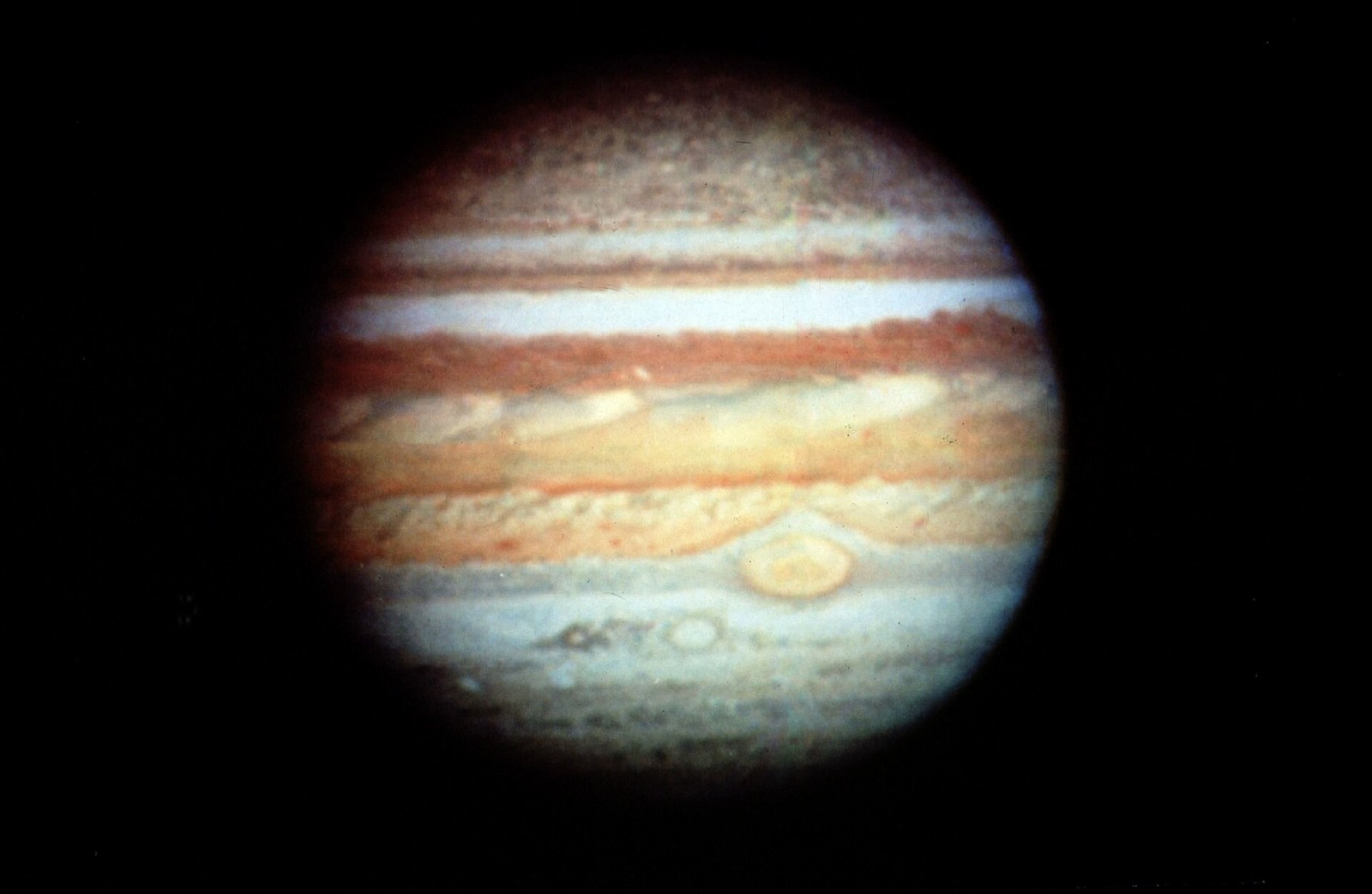
The present concept provides for twelve scientific payloads: ten on the orbiter and two on the Callisto lander. Jupiter is the solar system's largest planet; Callisto is its second-largest moon. The proposed mission combines study of the planet's space environment with close investigation of the moon's surface and interior.
Two connected lines of scientific investigation
The orbiter's space-environment instruments include magnetic-field and wave detection equipment, particle analysers, a soft X-ray spectrometer and a far-ultraviolet imager. They are intended to examine Jupiter's auroras, interactions between its magnetosphere and the solar wind, and the movement of solar particles through the outer solar system.
Cameras, a laser altimeter, a visible-infrared imaging spectrometer and a gamma-ray spectrometer are intended to map Callisto, study surface materials and detect radioactive elements. On the lander, a composition analyser using Raman spectroscopy would identify materials at the landing site, while a surface magnetometer would take local magnetic readings.
Combining measurements from the surface and orbit could help distinguish magnetic signals associated with the ionosphere from those linked to the interior, improving understanding of the moon's structure and a possible subsurface ocean. A possible ocean is a research question, not a discovery announced in this call for proposals.
The centre is inviting overseas institutions to join Chinese-led teams or submit proposals of their own. Earlier planning information placed launch around 2029 on a Long March 5 rocket from Wenchang in Hainan. That is a planned timetable, subject to the development work still ahead. The mission is separate from NASA's Europa Clipper, launched in October 2024 to investigate a different icy moon, Europa, with arrival at Jupiter planned for April 2030.