Ancient underwater canyons help explain Flinders Ranges fossils
The dry ridges of South Australia's Flinders Ranges preserve traces of a very different landscape: an ancient ocean, broad underwater canyons and sediments that helped keep a record of some of Earth's earliest complex organisms. New geological mapping has connected those features to changing sea levels around 550 million years ago.
A team led by Adelaide University reconstructed how the region developed during the Ediacaran period, close to the emergence of early complex life. The work examines the setting in which sediments accumulated and fossils were preserved, rather than suggesting the ranges were always the exposed rocky country seen today.
Underwater valleys beneath today's ranges
Associate professor Diego Garcia-Bellido says the modern landscape has to be imagined beneath seawater. Canyons cut into that submerged terrain created room for large volumes of sediment to collect. Investigating where those channels lay helps explain the geological record visible in the rocks now.
Unusual formations around Nilpena Ediacara National Park first drew the researchers' attention to the submarine-canyon interpretation. Garcia-Bellido and colleagues from the university and the South Australian Museum then identified comparable features across the Flinders Ranges.
Some of the mapped canyons reached about 280 metres in depth and six kilometres in width. The findings point to seawater flooding as an important part of their development and of the later conditions that allowed early complex life to be recorded in the rock succession.
Why the environment matters to early evolution
Knowing an organism's shape is only part of understanding it. The researchers say reconstructing its surroundings helps explain where it lived, why it occupied that place and what made the habitat suitable. The new mapping provides that environmental context for the region's ancient fossil communities.
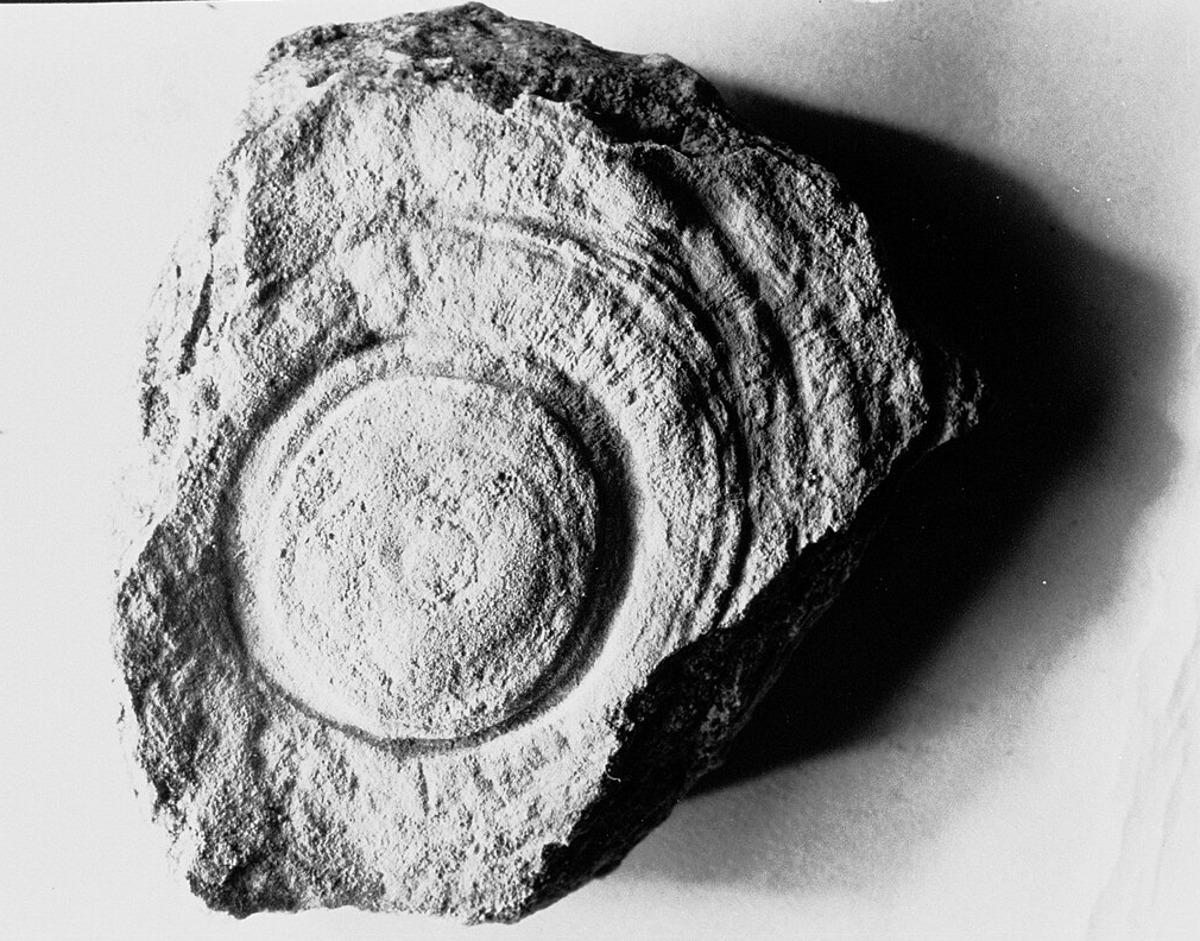
As canyons filled and the sea rose, the shallow continental shelf developed conditions favourable to microbial mats. Garcia-Bellido links those shallow-water environments to the growth and diversity of Ediacaran biota, soft-bodied organisms from a world very different from the animal communities familiar today.
The fossils are not a claim to have found the very first life of any kind. Their importance lies in documenting very early complex forms and the setting around the emergence of animals. Studying them offers a view of a stage of Earth's history long before the modern animals around us existed.
A landscape with a continuing heritage bid
Ediacaran fossils were first found in the Flinders Ranges in 1946. They remain central to the region's scientific value and to the continuing bid for UNESCO World Heritage recognition. The bid is ongoing; the new study is not an announcement that World Heritage status has been awarded.
Field mapping at places such as Chace Range, including work carried out over several years, lets the researchers connect individual outcrops to a broader ancient coastline and sea-floor system. The aim is to understand not only which early organisms were preserved, but also the processes that made their extraordinary record possible.