Police report 28 deaths after Kohat ambush linked to illegal gold mining
Ten police officers and 18 armed attackers were killed after a police team returning from an operation against illegal gold mining came under fire in Pakistan's Kohat district on November 11, provincial police said. The operation took place around Darabukach in the Gumbat area of Khyber Pakhtunkhwa and involved police and published reporting civil administration. The death toll is the authorities' account, also reported by published reporting.
Responsibility claims and differing injury reports
Police blamed fighters whom the Pakistani state calls Fitna al-Khawarij, its term for members of the banned Tehrik-e-Taliban Pakistan (TTP). The published report subsequently reported that the Pakistani Taliban claimed the attack. Police also alleged links between the attackers and criminal groups involved in mining. Those alleged links are not treated here as an independently established finding. The provincial governor condemned the attack and requested a detailed report.
The published report quoted the Kohat hospital superintendent saying ten injured police personnel were brought in, with two seriously injured people transferred to Peshawar and eight treated locally. Published reporting carried reports of twelve wounded or transported for treatment. These are differing source accounts, not a single reconciled injury total. Vehicle accounts also differ: the published report quoted police saying five vehicles were burned, while an official cited by the published report described two police vehicles burned and three vehicles missing. Neither version is presented as a final independently checked count.
Why gold extraction is at the centre of the dispute
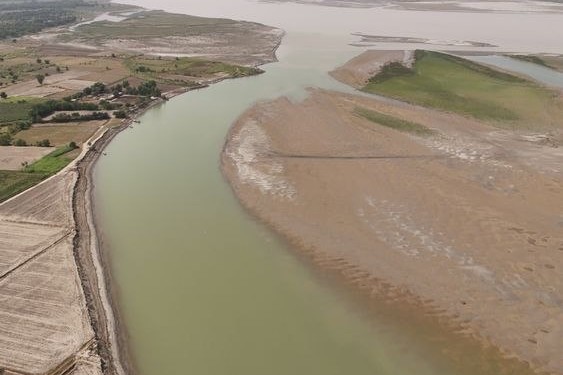
The Indus carries small gold particles eroded from mineral-bearing rocks upstream. Heavier particles can settle in riverbed sand and gravel, allowing traditional panning and washing. The published report's account quotes an environmental academic explaining that hand methods remove lighter material with water, leaving heavier gold particles behind. The article describes riverbank gold extraction as a long-established livelihood, but distinguishes it from unauthorised mechanised mining.
Excavators, pumps and industrial separation equipment can process much more sediment than hand tools. Published reporting indicates local claims of yields rising from roughly one gram to five or six grams, without specifying a standard time or quantity of sediment; these are not a guaranteed production rate. It also describes increased concern about pollution and erosion. The provincial authorities have restricted unauthorised extraction along the Indus and Kabul rivers in affected districts, including Kohat, Swabi and Nowshera, and authorised action against equipment used illegally.
Published reporting indicates that the Kohat administration had imposed a 60-day restriction on parking excavators in specified gold-mining blocks and nearby areas a day before the attack. It had also restricted supplying fuel in open containers for unauthorised mining. The the published report account says more than 100 cases concerning illegal gold extraction were registered over two years, while precise figures for the number of people extracting gold in Gilgit-Baltistan were unavailable. The region's broader violence and mining disputes provide context, but do not establish responsibility for this particular attack beyond the attributed police and militant statements.