Northern cattle face more dangerous heat as study tests the protection of shade
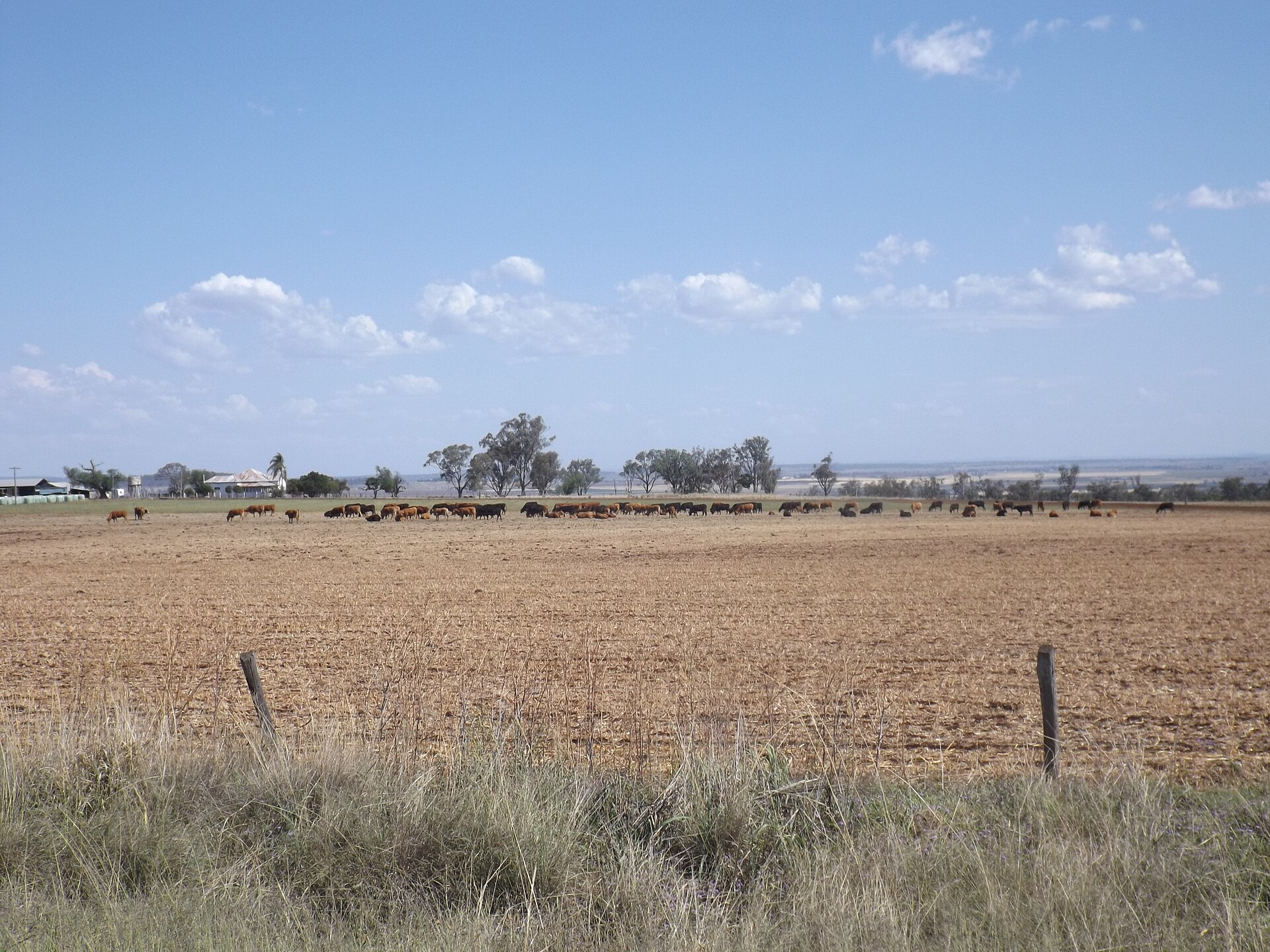
Illustrative cattle at East Greenmount, Queensland in 2014; not a current heat-stress event.
Northern Australian cattle face longer seasons of dangerous heat, with British breeds especially exposed, according to climate research. Brahman and other tropical cattle tolerate heat better, but are not immune. Purpose-built shade could offset much of the projected additional exposure, alongside breed choices, cooler working hours and sharp emissions cuts.
Australia is about 1.5°C warmer than when records began in 1910. Around half its 30.8 million cattle live outdoors in the tropical and semi-arid north. Grass fermentation generates internal heat and cattle sweat less effectively than humans, relying on panting, shade and cool nights. Australians ate about 22 kg of beef per person in 2024, underscoring the industry's importance.
The researchers compared 1990-2010 conditions with 2050s and 2090s projections under low and high emissions. Their Heat Load Index combines temperature, humidity, wind and sunshine. British Bos taurus breeds such as Angus and Hereford begin accumulating unsafe heat above 86; tropical Bos indicus breeds such as Brahman tolerate an index of 96. Most northern producers already use Brahman or crosses.
Across the region, dangerous days for British breeds rise from 117 a year at present to 143 by the 2050s under low emissions, and up to 195 by the 2090s under high emissions. Some semi-arid inland areas could exceed 300 days. For Brahman cattle the regional average rises from 17 to between 32 under low emissions and 84 under high emissions.
At Dalby in Queensland, where more than half the herd is British-breed, dangerous days rise from about 45 to 134 by the 2090s under high emissions, or about 70 even with rapid cuts. In the Northern Territory's Barkly, where three-quarters of cattle are tropical Brahman, the figure rises from 15 to 106 under high emissions, roughly one day in three.
Heat stress often harms production cumulatively rather than killing outright. At 38°C cattle can eat 15-18 per cent less, slow their weight gain and take longer to market; fertility also suffers. Heat above the British-breed threshold in the week before slaughter increases the chance of less valuable dark-cutting beef. Warmer nights reduce recovery.
Shade blocking 70 per cent of sunlight could bring late-century high-emissions heat exposure back near today's unshaded levels in five of six site-and-breed combinations tested. This usually needs shade-cloth structures near water or open-sided sheds; paddock trees offer less protection. Shade cannot remove humidity or hot nights. Moving more fast-growing British cattle north therefore carries risk, while feedlots have already expanded shade after heat deaths.
Workers face parallel risks. Daytime mustering on horseback in Barkly becomes unsafe on 217 days annually under high emissions, compared with 134 now. Many stations already start at dawn. By the 2090s, even dawn work could be unsafe more often than full-day work is today. Strong emissions reductions could determine whether adaptation remains manageable or causes severe losses for Australia's most valuable farm export.
Illustrative cattle at East Greenmount, Queensland in 2014; not a current heat-stress event.