Radio pulses point to a white dwarf orbiting a Sun-like star
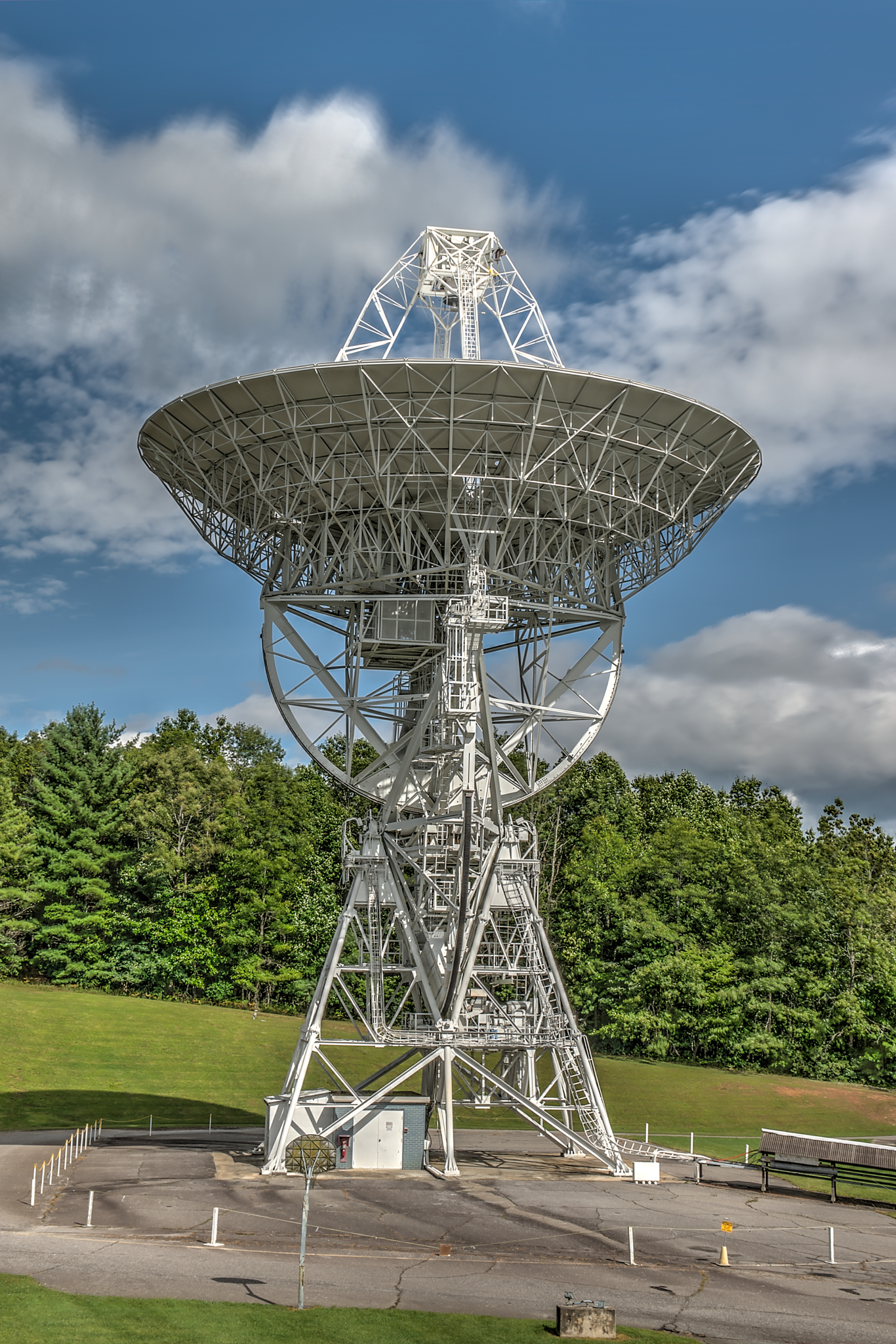
Illustrative PARI radio telescope in the United States in 2017, not the instruments used in this discovery.
A radio source found with Western Australia's Murchison Widefield Array has led astronomers to a likely white dwarf pulsar orbiting a star much like the Sun. The discovery broadens the possible origins of long-period radio transients, objects that emit bright radio flashes at intervals of minutes to hours. The researchers reported their interpretation in Nature Astronomy on 12 November.
The first such transient was discovered in 2022. Very slowly rotating neutron stars were one proposed explanation, but theory says a neutron star turning that slowly should not produce the observed radio waves. Several identified sources instead point to binary systems containing a white dwarf, the remnant of a Sun-like star, and a small, cool red dwarf. The new system appears to have a different companion.
In late 2024, a search technique developed by a doctoral student detected short flashes arriving every 7.9 minutes. The flashes then disappeared for weeks. Combining detections with periods of silence revealed a pattern: pulses are visible for about six hours, followed by 26 hours without them. The team interprets this as a 32-hour orbit whose alignment determines when the pulses can be seen.
South Africa's MeerKAT telescope located the source in a small patch of sky containing one faint star. Spectra from the Keck telescope in Hawai'i showed that the visible star was not a red dwarf but a G-type star with almost the Sun's mass and temperature. That combination had not previously been identified for this kind of white dwarf pulsar.
The unseen pulsing object's mass was inferred from timing and motion rather than a direct image. Pulses arrive up to four seconds early or late as the source moves around its orbit, revealing the orbit's size. The visible star's spectrum shows little wobble, indicating it is much heavier than its partner. Combining the orbit's size and duration with those measurements gives the pulsing object roughly two-thirds of the Sun's mass, too little for a neutron star.
The researchers therefore favour a white dwarf pulsar. They propose that its progenitor expanded into a giant, engulfed the companion and caused it to spiral inward before the giant's outer layers were expelled. This is a proposed evolutionary explanation, not a directly observed reconstruction. Such binaries may be common but are hard to see because a bright companion hides the dim white dwarf.
Radio pulses can reveal systems that optical and X-ray observations miss. Some white dwarf binaries are thought to precede Type Ia supernovae, the exploding stars used as distance references for measuring cosmic expansion, so finding more may improve understanding of that process. Future radio surveys, including the SKA Observatory, could test whether similar pulsars occur around a wider range of stars and clarify the lives and deaths of stars like the Sun.
Illustrative PARI radio telescope in the United States in 2017, not the instruments used in this discovery.