The architecture behind reliable AI agents: LangChain, LangGraph, and the story of control
Most organisations have moved past whether to adopt AI agents. The harder question is how to let them act without losing control. The LangChain-to-LangGraph evolution explains the shift.
In October 2025 the LangChain company raised US$125 million in a Series B led by IVP at a US$1.25 billion valuation. The company says its tools see about 90 million downloads a month; more than a third of a media report 500 uses them.
Harrison Chase, a Harvard statistics and computer-science graduate, released LangChain as an open-source Python project in October 2022. In early 2023 he co-founded the company with Ankush Gola, a Princeton-educated engineer and former colleague.
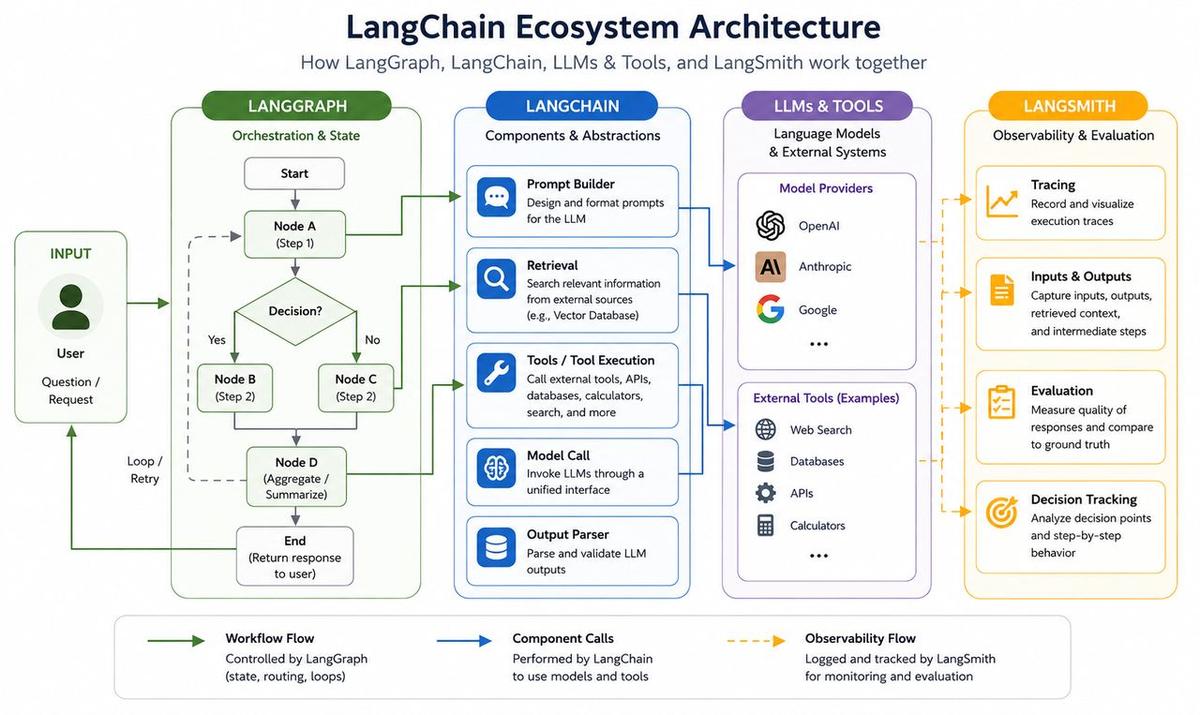
LangChain began as a framework for LLM applications, but simple prompt chains cannot support long-running, controllable agent workflows. In January 2024 came LangGraph, a graph-based runtime for stateful agents supporting human approval steps, retries and persistence. In October 2025 both reached 1.0 stability milestones, with LangChain itself rebuilt on the LangGraph runtime.
A chain is a straight line; a graph is a map of decisions where an agent can branch, loop, retry, delegate and pause for human input. Checkpointed state lets a process wait hours for an approval and resume; approval steps are nodes in the graph.
In enterprise AI the moat is reliability. In insurance claims processing, an orchestrator can coordinate specialist agents for intake, policy verification and fraud screening, but releasing money sits behind an approval gate only an authorised claims officer can open. Automate boldly where errors are cheap; gate firmly where they are expensive.
Four risks deserve board attention: agents acting without approval checkpoints; auditability and privacy controls; concentration risk, since LangGraph is open source under the MIT licence but commercial services still create dependence; and regulators' expectation of provable human oversight.
For executives: ask where agents may act, not what they may answer; demand a written approval-gate policy; fund observability and evaluation as core costs. For technology leaders: standardise on one orchestration layer, instrument every decision as a replayable trace, and start with asymmetric workflows. The winners will know what their agents may do and can prove it.