Influencer seeding takes new Amazon listings from zero to six figures
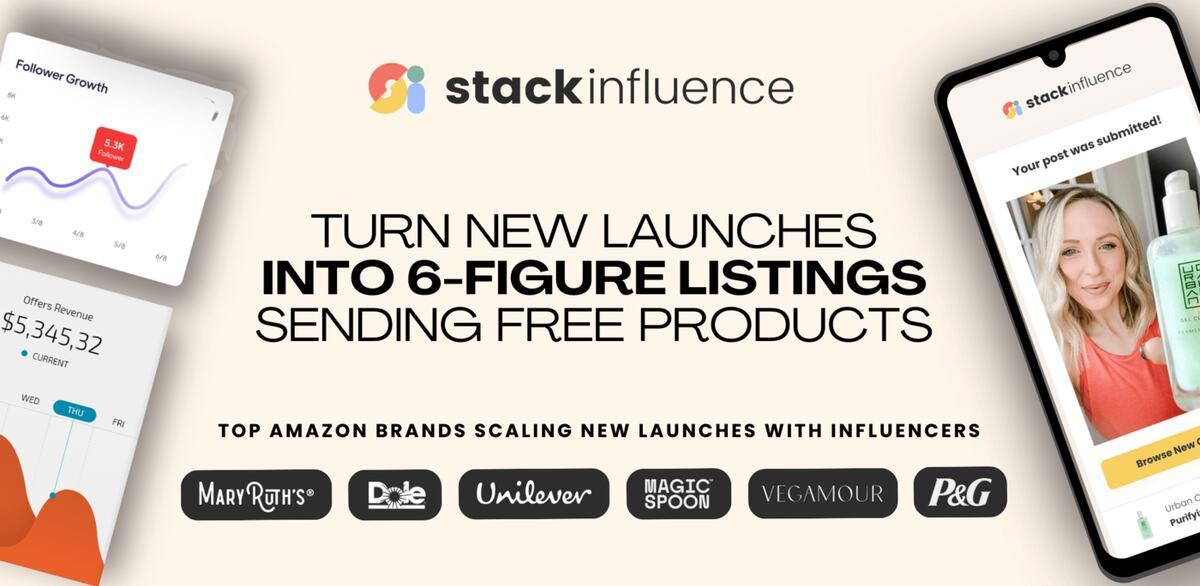
Fresh case data shows how micro-influencer campaigns can turn a new Amazon launch into a six-figure listing in under two months.
One campaign activated 200 influencers in mid-October on a newly launched product. In under two months the listing's Best Sellers Rank improved 34-fold and monthly recurring sales grew 7.6 times, from 165 to 1,247 units, equivalent to $204,252 in year-over-year revenue. The product's average rating climbed from 3.7 to 4.8 over the same period.
A second campaign used 291 influencers to take a product from zero to 447 average monthly recurring sales, pacing toward $150,000 in annual Amazon revenue, while earning an Amazon's Choice badge and a top-20 position in its sub-category.
The campaigns also generate reusable image and video content with full usage rights and establish long-term affiliate relationships, making the approach a combined ranking, content, and affiliate play for 2025 launches.
Earlier January 2025 promotion: a separate set of case figures
An earlier promotional message dated January 7, 2025 described the same general product-seeding approach, with its own case figures. Stack Influence pitched automated collaborations with micro-influencers: a seller supplies products instead of negotiating individual creator fees, while the platform manages collaborations at scale. It named Magic Spoon, Unilever and Farmacy among the brands cited in its page-one-ranking and revenue-growth pitch.
The five advertised benefits were external-traffic sales intended to improve search position; compensating influencers with products; branded photo and video content that the provider said came with full legal usage rights and no time restriction; identifying strong creators for longer-term affiliate relationships; and end-to-end automation said to save more than 175 management hours a month. Those are the service provider's claims in that dated promotion.
The January edition described a campaign beginning in mid-October with 200 influencers on a recently launched product. It reported a 38-fold improvement in Best Sellers Rank and a 7.8-fold rise in recurring monthly sales, from 165 to 1,288, within two months. It also said the product rating had risen from 3.7 to 4.8 and pointed readers to a client testimonial video and charts covering sales, rank and reviews.
These January figures are retained as a separate dated report. They do not replace the February 4 edition's figures above, which gave a 34-fold rank improvement and 165 to 1,247 monthly sales. The supplied editions contain different numbers; this article does not combine them into a single result.
A second example in the January promotion concerned a brand that had raised investment on Shark Tank and then used micro-influencer product seeding. The message claimed a 13-times return on investment and linked to a fuller case study. Its broader pitch cited revenue increases as high as thirteenfold within two months, but did not make those outcomes a result every seller could expect.
The email closed with a 10% sign-up discount tied to mentioning the referring seller newsletter, as part of its January 2025 promotion. That is a historical commercial offer, not a current discount promised here. The supplied email gives the campaign model, benefits and the reported cases; it does not contain the full linked testimonial transcript or the brand's complete accounts.