Sri Lanka reported among 151 backing UN committee text on Palestinian resource rights
Sri Lanka is reported to be among 151 countries that supported a United Nations committee text on Palestinian rights over natural resources. The General Assembly's Second Committee approved the draft on November 11 by 151 votes to seven, with 11 abstentions. This was approval at committee level, not final adoption by the full General Assembly.
The draft concerns the permanent sovereignty of Palestinians in the occupied Palestinian territory, including East Jerusalem, and the Arab population of the occupied Syrian Golan over their natural resources. Land and water, the environment and the infrastructure needed to support everyday life are central to its provisions.
The vote and the countries opposing it
The seven votes against came from the United States, Israel, Colombia, the Federated States of Micronesia, Nauru, Palau and Paraguay. Reporting on the country positions places Sri Lanka alongside India, China and the United Kingdom among those voting in favour. The United Nations' meeting account confirms the overall result and names the seven opposing countries.
Uruguay introduced the text on behalf of the Group of 77 and China. It is document A/C.2/81/L.39, considered by the Second Committee, which deals with economic and financial issues. The size of the majority records the positions taken at that meeting; it does not itself implement the draft's demands.
What the text calls for on resources and infrastructure
The text calls on Israel, as the occupying power, to stop exploiting, damaging, depleting or endangering natural resources in the occupied Palestinian territory and the occupied Syrian Golan. It also addresses environmental harm, including waste dumping, and actions carried out by Israeli settlers.
It seeks an end to the destruction of essential infrastructure, including water pipelines, sewage networks and electricity systems. It would recognise the Palestinian people's right to seek restitution for resource losses and damage resulting from unlawful measures by Israel and settlers. Recognising a claim to restitution is different from awarding a particular compensation sum or setting up an automatic payment.
Opposing arguments and Palestinian response
Israel's representative argued that the draft was one-sided, failed to address Palestinian leadership failures and corruption, and did not mention Hamas. The United States also opposed the text as unbalanced, saying such resolutions would not advance peace and calling for reforms by the Palestinian Authority. These were the delegations' explanations of their positions.
The Palestinian observer welcomed the majority as support for the rights and survival of the population, pointing to the destruction in Gaza and threats to livelihoods such as the olive harvest. Syria's representative also welcomed the result and criticised the occupation and appropriation of resources. The debate therefore concerned both economic rights and the wider political conflict.
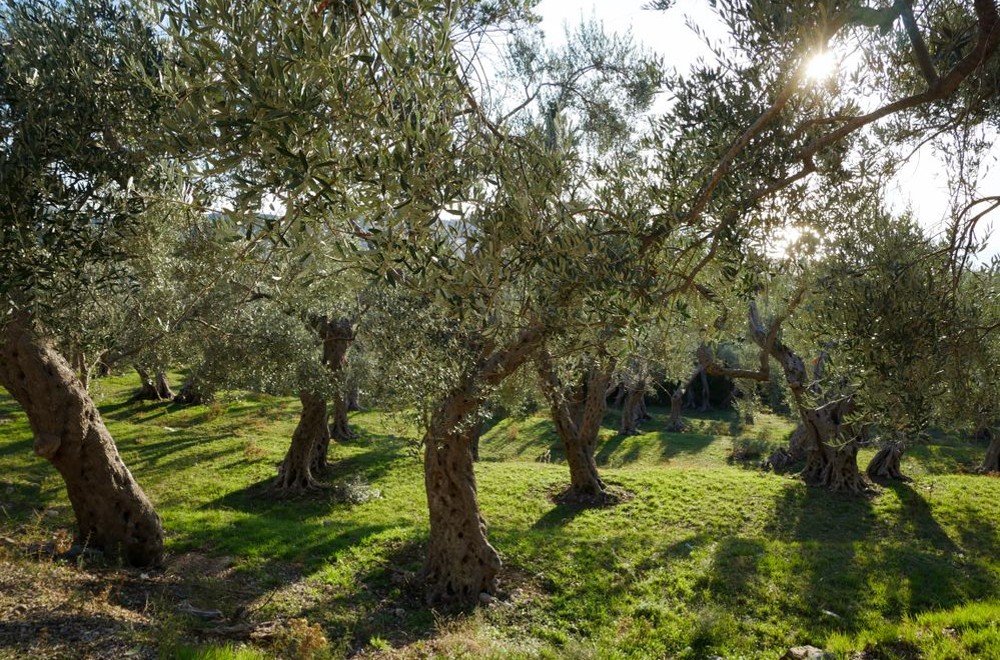
The draft moves next to the full General Assembly for consideration. General Assembly resolutions of this kind are not legally binding, although they carry political weight as a record of member states' positions. Sri Lanka has long supported Palestinian self-determination and a negotiated two-state settlement. The photograph is an illustrative olive grove, not a photograph of the vote or evidence of conditions at a specific Palestinian site.