11 tips for doing gentle core work safely and effectively

However tempting it is to jump straight into your workout, safety deserves attention first.
To get the best results from core exercises and stretches, follow these 11 tips:
Warm up. Before a full core workout, march in place for several minutes while swinging your arms, or dance to a few songs. It is safe to skip this if you have already warmed up through other activities.
Form first. Good form means aligning your body as the exercise instructions describe and moving smoothly through each exercise.
Reps second. More is not necessarily better. Do only as many repetitions (reps) as you can manage with excellent form, and hold a position only as long as your form stays proper. Work up to the full number of reps or seconds gradually.
Feel no pain. Core work should not hurt. Stop if you feel any sharp or intense pain, especially in your lower back or joints. Check your form and try again; if pain persists, see a doctor or physical therapist before repeating that exercise. Ordinary muscle fatigue during exercise is normal, however.
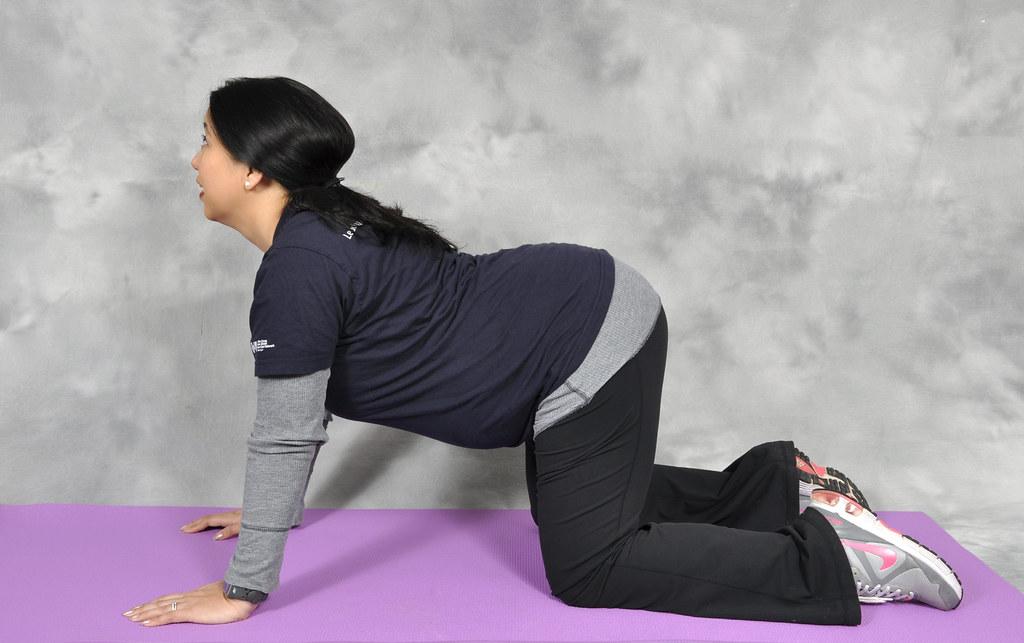
Remember that photos tell only part of the story. Pictures can make core work look easier than it really is, so read the instructions for each exercise carefully. And keep at it: practice makes perfect.
Brace yourself. Tighten your core muscles before starting the movement in each exercise. Here is how: while sitting, standing, or lying on your back, gently but firmly tighten your abdominal muscles. Once braced, a gentle push from any direction should not knock you off balance. Some trainers suggest imagining you are pulling your muscles in to zip up a tight pair of jeans or fasten a snug jacket. Practice bracing for 10 seconds at a time while breathing normally.
If it gets too easy, step it up. As exercises start feeling easier with good form, first add reps to complete a full set, or add seconds if the move calls for holding a position. Next, add another set (up to two total, where the instructions call for it). Then move on to level 2 exercises where available, leaving the simpler ones behind so your exercise time stays efficient.
Be balanced. When possible, pair exercises with opposing movements, such as the standing hamstring curl with the standing knee lift, or the ball squeeze with the standing side leg lift. Pairing creates balance among muscle groups, helps prevent injury, and is often used in rehabilitation. A good core program works the front, back, inner, and outer leg muscles as well as the hips, buttocks, abdominals, and back.
Be flexible. Core flexibility matters as much as core strength. Too much strength without flexibility can leave your back throbbing and interfere with movements like swinging a golf club, so do not skimp on stretches when fitting core work into your day.
Move before stretching. Muscles behave a bit like taffy: you get a better stretch once your body is warm, and you are less likely to hurt yourself. Stretch after core exercises or after at least five minutes of another activity such as walking.
Practice often. You will notice real gains if you do core work three or more times a week. One helpful strategy is sprinkling it through the day: a set each of side-lying inner-thigh leg raises and clams before dressing, a set of chair stands after lunch, or a calming stretch before bed.