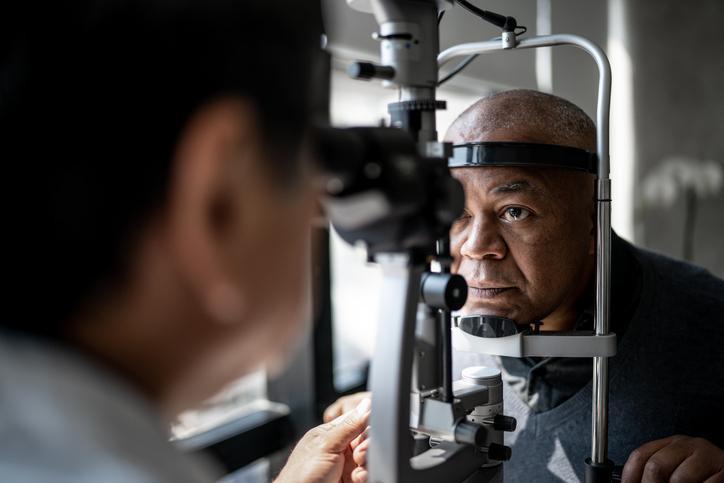
Effective tips for reducing eye strain

Do your eyes water - or feel uncomfortably dry - after a day at the computer? Does your vision blur after an afternoon of needlework? Maybe your eyes feel sore after a long drive or a couple of hours scrolling on your phone. The good news: regular breaks and a few easy adjustments can keep your eyes comfortable through the day.
What is eye strain and what causes it?
"Eye strain" is not an official medical term or diagnosis. It is a colloquial way of describing eye discomfort, sometimes paired with short-term vision difficulties.
Long stretches of intense focus on one task can produce symptoms we call eye strain. Extended close work - reading small print or doing detailed needlework - can make it hard to relax your focus when you look up at something farther away. Discomfort can also come from working in dim light or other conditions that make your eyes work harder.
When long screen sessions are the cause, it is also called digital eye strain or computer vision syndrome. Much of the discomfort comes from our natural tendency to blink less when staring at a screen.
Activities that commonly cause eye discomfort when done for long periods without breaks include:
Time on computers, tablets, cell phones, or in front of the TV
Driving
Reading, especially small print or small font sizes
Needlework or other crafts requiring sustained close focus.
Other factors that strain the eyes include:
Dim lighting
Glare or very bright lighting
Air blowing directly into the eyes, causing dryness
Dust or smudges on a digital screen
Bad weather while driving
Glasses or contact lenses with an incorrect prescription.
Symptoms from computer vision syndrome or less-than-ideal viewing conditions can be uncomfortable, but they do not damage your vision, according to the American Academy of Ophthalmology (AAO). Breaks and artificial tears usually help.
Common symptoms of eye strain
What does eye discomfort feel like? Common symptoms include:
Eyes that are either dry or watery
Blurred vision or difficulty focusing
Eyes that feel tired, sore, itchy, or burning
Difficulty keeping your eyes open
Muscle spasms in the eyes or eyelids
Headache behind the eyes
Eye pain in bright light.
Eye strain can also hurt concentration, productivity, or reading accuracy because of blurred vision. And back, neck, or shoulder pain can follow from the bad posture you adopt to compensate for tired eyes.
Tips for reducing eye strain
Take regular breaks
Follow the 20-20-20 rule for close-up tasks: every 20 minutes, look at something about 20 feet away for 20 seconds.
After two hours or 100 miles of continuous driving, take a break - or stop sooner if you need to.
Keep eye surfaces moist
Remember to blink - we blink less when reading print or viewing screens.
Use artificial teardrops during long drives or long screen sessions.
Wear eyeglasses rather than contact lenses for computer work, or use comfort drops.
Aim car air vents away from your eyes.
Run a humidifier in winter.
Get a clear view
Keep digital screens and eyeglasses clean.
Cut daytime glare with polarized sunglasses, especially when driving.
Creating an eye-friendly workspace
The AAO recommends these steps for a workspace that avoids dry eyes and strain:
Position your computer screen 20 to 26 inches from your face, with the center of the screen slightly below eye level.
Face the screen away from glare from windows or overhead lighting.
Use a matte screen filter if your screen is shiny.
Match screen brightness to room lighting.
Increase on-screen contrast.
Consider prescription computer glasses designed for focusing at about 25 inches.
Sit in a comfortable chair that supports good posture: feet flat on the floor, arms supported.
The AAO does not recommend blue light glasses, because there is no strong evidence that blue light from digital devices causes eye strain.