Getting started on the path to better balance

Balance is the ability to distribute your weight so you can hold a steady position or move at will without falling. Static balance keeps you upright when standing still; dynamic balance lets you anticipate and react to change as you move. Both keep your center of gravity, the point where body weight is evenly distributed, poised over your base of support.
Whether you are moving or standing still, balance depends on interplay among several systems: the central nervous system (brain and spinal cord), the vestibular system (brain and inner ear), the visual system (brain and eyes), and a vast web of position-sensing nerves called proprioceptors in peripheral areas of the body such as the legs.
Good posture counts
Your spine is not ramrod straight; it has a gentle S-shaped curve that limits wear and tear and allows flexibility. Still, proper alignment of the spine and upper body matters for balance. Watch people walk and you will see how commonly bodies are held unevenly. If someone trips, that misalignment makes it harder to catch themselves and avoid a fall.
Poor posture can come from many causes: a lifetime of slouching, weakness in key muscle groups, or tightness in various muscles and tendons. Tight muscles shorten, which limits range of motion (how far a joint moves in each direction) and makes you less nimble. Without stretches to counter it, your range of motion will likely shrink further.
Muscle strength matters
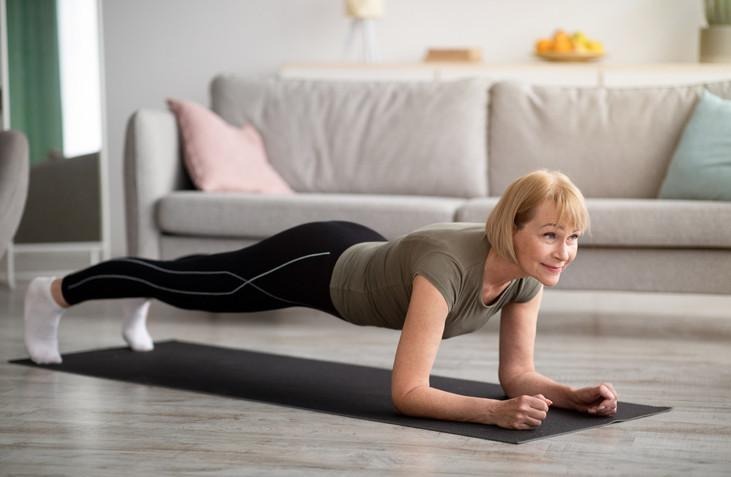
The so-called core muscles of the abdomen, back, sides, pelvis, and buttocks are essential for holding proper alignment and making the micro-adjustments that keep you steady. Strong back muscles are especially important for counteracting slumping, which tips the body forward and off-center. Strong lower-leg muscles help keep you from swaying too much while standing.
How to improve balance
Better balance comes from the right mix of exercises that both strengthen and stretch muscles.
Quick posture checks, ideally in front of a full-length mirror, also help. Aim for: chin parallel to the floor; shoulders even (roll them up, back, and down to find the position); ears in line with shoulders; a neutral spine with only its natural curves; arms at your sides with elbows even; abdominal muscles pulled taut; hips even; shoulders in line with hips; knees even and pointing straight ahead; and feet pointing straight ahead.
When to worry
If you often feel unsteady on your feet, or you suffer dizziness or vertigo (the sensation of the room spinning), talk with your doctor. Balance problems and fall risks too often go undiscussed until they become serious. Catching and addressing issues early helps you avoid future trouble. Diagnosis may start with a physical exam and medication review, plus further testing as needed.